Pulsamento Definition and Meaning
What Does Pulsamento Mean?
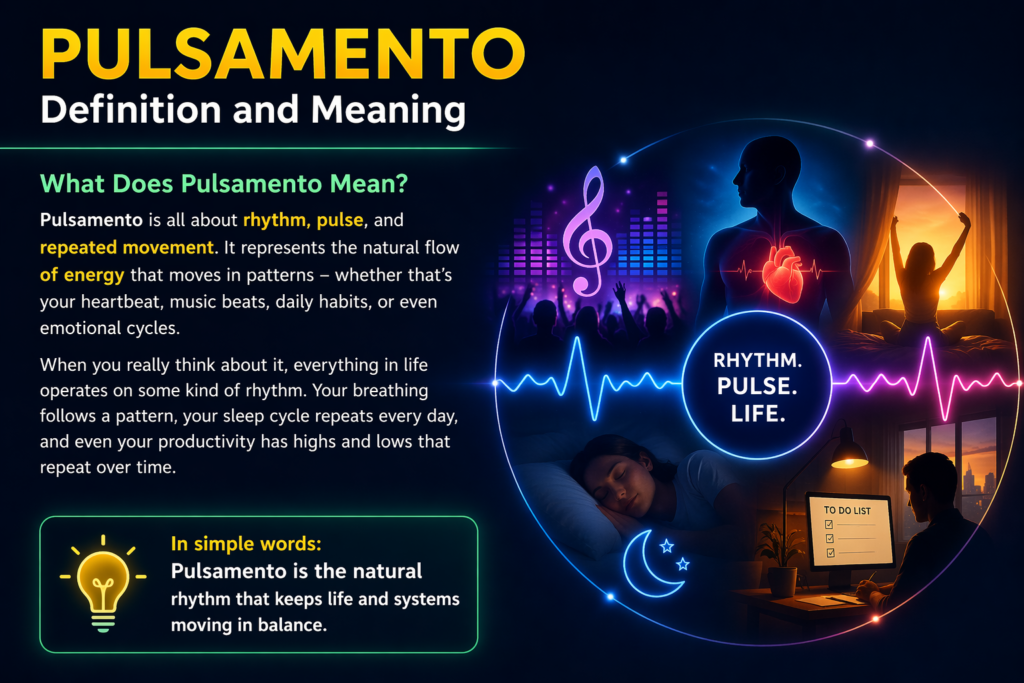
Let’s break it down in the simplest and most powerful way possible. Pulsamento is all about rhythm, pulse, and repeated movement. It represents the natural flow of energy that moves in patterns—whether that’s your heartbeat, music beats, daily habits, or even emotional cycles. When you really think about it, everything in life operates on some kind of rhythm. Your breathing follows a pattern, your sleep cycle repeats every day, and even your productivity has highs and lows that repeat over time.
Instead of being limited to one field like music or biology, pulsamento becomes a universal idea. It’s like a bridge that links music, health, psychology, and lifestyle into one powerful theme. That’s why it feels so natural once you understand it—it’s already happening around you.
Now imagine explaining life as a rhythm instead of chaos. Suddenly, things make more sense. When your rhythm is stable, you feel balanced. When it’s off, everything feels messy. That’s pulsamento in action—it’s not just a word, it’s a way of understanding how systems move and function.
Why This Concept Matters Today

In today’s world, people often feel overwhelmed because everything seems unpredictable. But when you start noticing patterns, things become easier to understand. Pulsamento gives you that clarity. It shows you that beneath the noise, there is always a structure.
Modern life constantly breaks our natural rhythm—late nights, irregular routines, constant distractions. That’s why so many people feel out of sync. Understanding pulsamento helps you reconnect with a more stable and balanced way of living.
The Core Concept of Pulsamento
Understanding Rhythm and Pulse
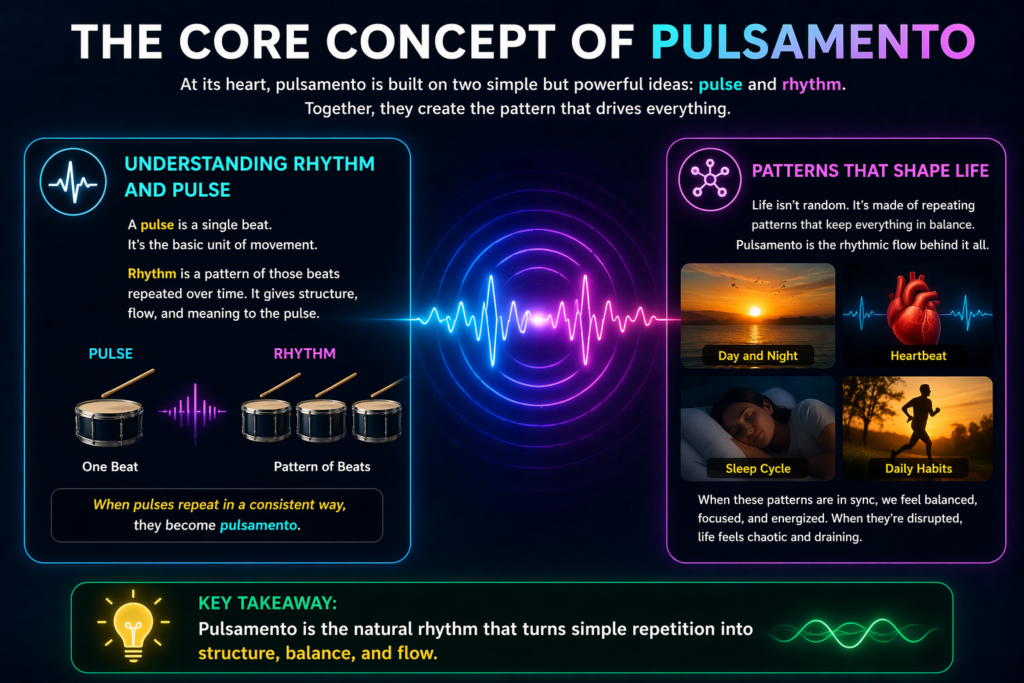
At its core, pulsamento is built on two simple ideas: pulse and rhythm. A pulse is a single beat, while rhythm is a pattern of those beats over time. Think of a drum—one hit is just a sound, but repeated hits create structure. That structure becomes rhythm, and when it continues smoothly, it becomes pulsamento.
This idea applies everywhere. In music, rhythm keeps everything together. In life, routines create stability. Without rhythm, things fall apart. Imagine a song without timing—it would just be noise. The same applies to life. Without structure, everything feels chaotic.
Pulsamento is what gives order to repetition. It’s the difference between randomness and flow.
Patterns That Shape Life
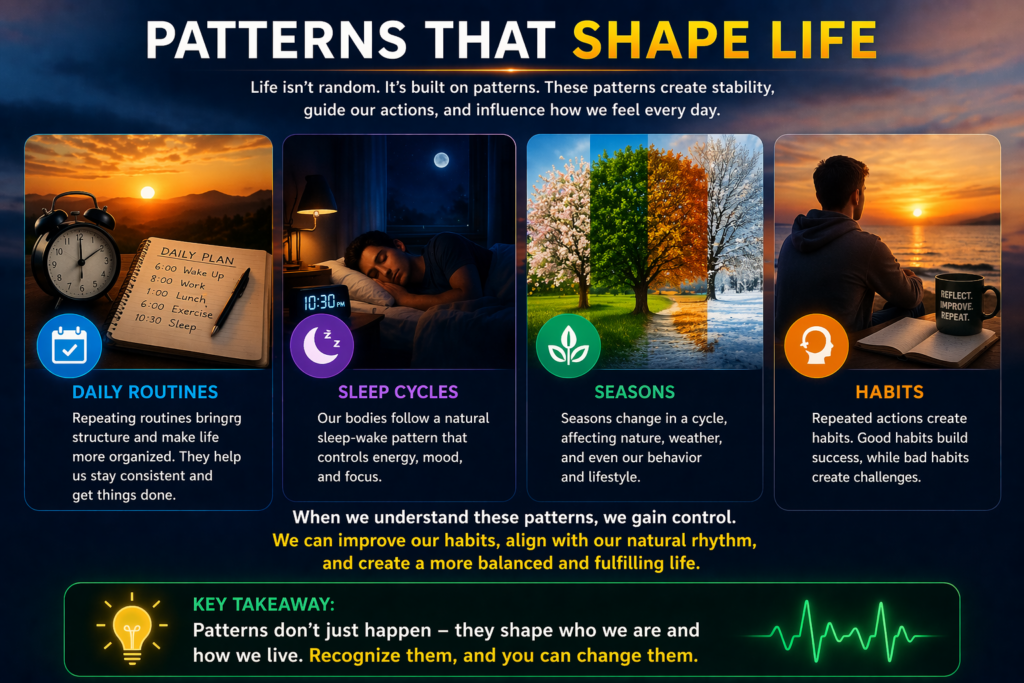
Life is not random—it’s built on patterns. Your body follows cycles, your habits repeat daily, and even your thoughts move in patterns. These patterns create a sense of stability.
For example, your daily routine is a rhythm. When it’s consistent, you feel organized and in control. When it’s broken, everything feels off. That’s because your internal pulsamento has been disturbed.
Once you recognize these patterns, you can improve them. You stop reacting to life and start shaping it.
Pulsamento in Music
Rhythm in Sound and Beats
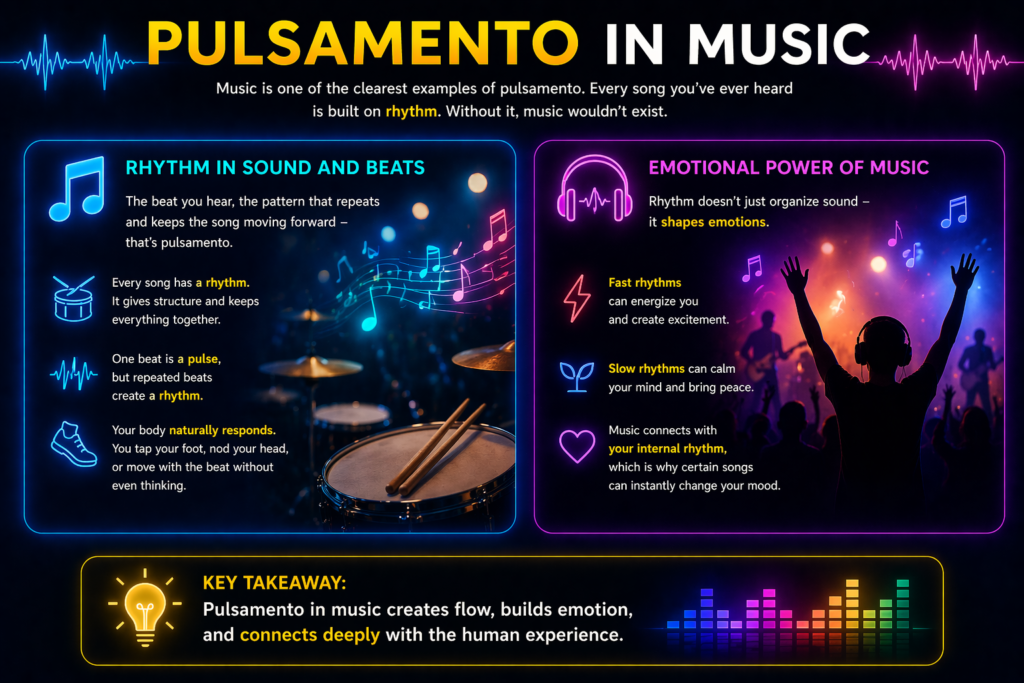
Music is the clearest example of pulsamento. Every song is built on rhythm. The beat you hear, the pattern that keeps the song moving—that’s pulsamento.
Without rhythm, music would feel empty. But with it, everything flows. That’s why your body naturally responds to music. You tap your foot or move with the beat without even thinking.
Emotional Power of Music
Rhythm doesn’t just organize sound—it affects emotion. Fast rhythms can energize you, while slow rhythms can calm you down. This happens because music connects with your internal rhythm.
That’s why certain songs can instantly change your mood. They align with your pulsamento and create a strong emotional response.
Pulsamento in the Human Body
Heartbeat and Natural Pulses
Your body is constantly working in rhythms. Your heartbeat is the most obvious example. Each beat is a pulse, and together they form a rhythm that keeps you alive.
But it doesn’t stop there. Your breathing, digestion, and even your brain activity follow patterns. These systems work together to maintain balance.
Biological Rhythms and Cycles
Your body also follows longer cycles, like sleep patterns. These rhythms control your energy and focus. When they are balanced, you feel good. When they are disrupted, you feel tired and unfocused.
That’s why consistency matters. Simple habits like sleeping on time can improve your internal rhythm.
Pulsamento in Daily Life
Habits and Routine Patterns
Your daily habits are repeating patterns. Over time, these patterns shape your life. Good habits create a strong rhythm, while bad habits create imbalance.
The key is consistency. Once a habit becomes part of your rhythm, it becomes easy to maintain.
Productivity and Time Flow
Productivity isn’t about working all the time—it’s about working with your rhythm. Everyone has different energy patterns. Understanding your rhythm helps you work more efficiently.
Instead of forcing yourself, you align your work with your natural flow.
Pulsamento and the Mind
Brain Waves and Focus
Your brain works in patterns called brain waves. These patterns control your focus and mental state. When your brain is in the right rhythm, you can concentrate better.
Emotional Rhythm and Stability
Your emotions also follow cycles. You’re not always happy or stressed—they come and go. Understanding this helps you stay balanced.
Pulsamento in Technology and Modern Systems
Technology also follows rhythm. Computers process information in cycles, and data moves in patterns. This structure keeps systems running smoothly.
When that rhythm breaks—like slow internet—you immediately notice. That’s because the flow is disrupted.
Pulsamento in Human Behavior
Your behavior is shaped by repetition. Over time, your actions become patterns. These patterns define your lifestyle.
Once you understand them, you can change them.
Pulsamento and Energy Flow
Your energy rises and falls throughout the day. Instead of fighting it, you can use it to your advantage. Work when your energy is high and rest when it’s low.
This creates a natural balance.
Conclusion
Pulsamento is everywhere—in your body, your mind, your habits, and the world around you. It’s the rhythm that keeps everything moving.
Once you understand it, life feels less chaotic and more structured. You stop fighting the flow and start moving with it.
FAQs
1. What is pulsamento?
It is a rhythm or repeating pattern found in life and systems.
2. Is pulsamento only related to music?
No, it applies to health, habits, psychology, and more.
3. Why is rhythm important?
Because it creates structure and balance.
4. Can pulsamento improve life?
Yes, by helping you understand and control patterns.
5. How can I use pulsamento?
By building consistent habits and following your natural rhythm.